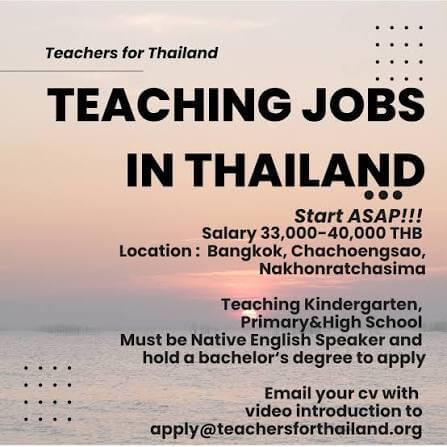
Teaching Jobs in Thailand: Your Complete Guide to a Rewarding Career in the Land of Smiles
Thailand has long been a top destination for educators seeking adventure, cultural immersion, and professional growth. Known as the “Land of Smiles,” this Southeast Asian gem offers a unique blend of ancient traditions, modern cities, stunning natural landscapes, and a surprisingly affordable cost of living. For qualified teachers, especially those from English-speaking countries, the Land of Smiles presents abundant opportunities.
But what does it really take to land a teaching job in Thailand? Is it just about backpacking and working informally, or can you build a genuine, sustainable career there? This comprehensive guide will walk you through everything you need to know—from qualifications and visa requirements to the best locations, salary expectations, and cultural tips for success.
Why Choose Thailand for Teaching?
Before diving into the logistics, it is worth understanding why thousands of teachers flock to Thailand every year.
First, the cost of living is remarkably low compared to Western countries. A comfortable apartment in Bangkok or Chiang Mai might cost between $200 and $400 per month. Street food meals are delicious, fresh, and often cost less than $1.50. This means even a modest teaching salary allows for a good quality of life, some travel, and the ability to save a little.
Second, the Thai people are genuinely warm and respectful toward teachers. In Thai culture, teachers hold a very high social status. There is even a national holiday called Wai Kru (Honoring Teacher Day), where students pay respect to their educators. You will feel valued and appreciated in a way that is less common in many Western education systems.
Third, the country is a travel paradise. On weekends and during school breaks, you can explore tropical islands, ancient ruins, misty mountains, and bustling metropolises. Teaching in Thailand is not just a job—it is a lifestyle.
Types of Teaching Jobs Available
Not all teaching positions in Thailand are the same. Understanding the different categories will help you target the right opportunity.
1. Government Schools (Public Schools)
These are the most common entry points for new teachers. Government schools range from elementary to high school level. The workload is often manageable, with around 20 to 22 teaching hours per week. The salary is typically between 30,000 and 40,000 Thai Baht (approximately $850 to $1,150 USD) per month. Holidays are generous, including long breaks in October and April.
The main challenge is that resources can be limited. You may need to create your own lesson plans and teaching materials. Additionally, English levels among students can be very low, requiring patience and creativity.
2. Private and International Schools
International schools are the top tier of teaching in Thailand. They follow curricula from the UK, US, or International Baccalaureate (IB). To work here, you generally need a teaching license from your home country and at least two years of experience. Salaries range from 80,000 to 150,000+ Baht per month ($2,300 to $4,300+ USD), plus excellent benefits like housing allowances, health insurance, and flight reimbursements.
Private bilingual schools fall somewhere in the middle. They pay better than government schools (50,000 to 70,000 Baht) but have higher expectations and longer working hours.
3. Language Schools and Tutoring Centers
These are ideal for people who want part-time work or flexible hours. Language schools operate in the evenings and on weekends, catering to adults and children who want extra English practice. Pay is often hourly, ranging from 300 to 600 Baht per hour. While this can be a good supplement, it is difficult to survive on only language school income unless you combine multiple gigs.
4. University Teaching Positions
For those with a master’s degree or higher, universities offer a relaxed environment with fewer teaching hours. You will likely teach English for Academic Purposes (EAP) or specific subjects like business or science. Salaries are comparable to government schools, but the prestige and lighter workload are attractive.
Legal Requirements: Visas and Work Permits
One of the most critical aspects of teaching legitimately in Thailand is securing the correct documentation. Teaching on a tourist visa is illegal and can result in deportation, a fine, and a ban from re-entering the country.
Here is the correct process:
Non-Immigrant B Visa:Your employer must sponsor this visa. It is typically valid for 90 days initially.
Teaching License or Waiver:The Thai Teachers’ Council (Khurusapha) requires foreign teachers to have a teaching license. However, most new teachers receive a Temporary Teaching Permit (waiver) while they gain experience and complete required training courses.
Work Permit:This is the golden document. Once you have your Non-B visa, your school will apply for a work permit. Without a work permit, you are working illegally. The work permit is tied to your specific school and job title. It must be renewed annually.
A good employer will handle most of this paperwork for you. Never accept a job from a school that asks you to work while your visa or work permit is “pending” for months.
Qualifications: What Do You Really Need?
The minimum requirement for most teaching jobs in Thailand is a bachelor’s degree in any field. It does not have to be in education. However, your degree must be original and often needs to be notarized and legalized by the Thai Ministry of Foreign Affairs.
A TEFL (Teaching English as a Foreign Language), TESOL, or CELTA certificate is highly recommended. While not strictly required for all government school jobs, it makes you a much stronger candidate. It also provides essential training in lesson planning, classroom management, and teaching grammar—skills you will need immediately.
Native English speakers from the US, UK, Canada, Australia, New Zealand, Ireland, and South Africa have an advantage. However, non-native speakers with excellent fluency and a recognized degree can also find work, especially in government or private schools.
Sponsored Links
The Recruitment Process: How to Find a Job
You have several options for finding a teaching position.
Online Job Portals
Websites like Ajarn.com (specifically for teaching in Thailand), Dave’s ESL Cafe, and Teachaway.com list hundreds of positions. Many schools hire year-round, though the main hiring seasons are March to May (for the April school start) and October to November (for the October term start).
Recruitment Agencies
Agencies like MediaKids, SINE Education, and Benjama Academy place teachers in government schools. The pay is slightly lower because the agency takes a cut, but they handle visa paperwork, provide curriculum, and offer support. This is a great option for first-timers.
Fly and Apply
Many experienced teachers recommend arriving in Thailand on a tourist visa (or visa-exempt entry) and then job hunting in person. You can visit schools directly, hand over your resume, and demonstrate your personality. If a school likes you, they will help you convert your visa status. However, this method carries more risk.
Salary and Benefits Breakdown
Let us talk numbers realistically.
Job Type
Monthly Salary (THB)
Benefits
Government School
30,000 – 40,000
Basic health insurance, paid holidays
Private School
45,000 – 65,000
Better insurance, sometimes housing allowance
International School
80,000 – 150,000+
Full benefits, flights, bonus, housing
Language School
25,000 – 40,000 (full-time)
Minimal benefits
A salary of 35,000 Baht is very livable outside of central Bangkok. You can rent a modern studio, eat out daily, take weekend trips, and still save 5,000 to 10,000 Baht per month if you budget well. In Bangkok, you need at least 40,000 to 45,000 Baht for a similar lifestyle.
Best Locations for Teaching in Thailand
Bangkok
The capital offers the highest salaries and most job opportunities. However, it is crowded, traffic is notorious, and the cost of living is higher. If you love city life, night markets, malls, and international food, Bangkok is for you.
Chiang Mai
In the mountainous north, Chiang Mai is beloved by teachers who prefer a slower pace. It is cheaper than Bangkok, has a huge expat community, and offers beautiful nature. Salaries are lower, but so is the cost of living.
Phuket and Islands
Teaching in a tourist hotspot sounds dreamy, and it can be. However, these areas are expensive, and jobs are often seasonal. Many island teaching jobs come with lower pay and less stability.
Isaan Region (Northeast)
This is where you can save the most money. The cost of living is extremely low, and people are incredibly welcoming. However, Isaan is rural, less developed, and has fewer Western amenities. Teachers who thrive here love authentic culture and community.
Cultural Challenges to Prepare For
Teaching in Thailand is not without its frustrations. Understanding the cultural differences beforehand will save you stress.
The “Mai Pen Rai” Attitude:This phrase means “never mind” or “it’s okay.” It reflects a relaxed, easygoing approach to life. Deadlines may be flexible, and schedules can change last minute. You need patience and adaptability.
Respect for Hierarchy:Questioning a senior teacher or administrator openly is seen as rude. If you have a concern, address it privately and respectfully.
Classroom Management:Thai students are generally polite but can be noisy and undisciplined by Western standards. Shouting rarely works. Building rapport and using engaging activities is more effective.
Royal Family and Religion:Never make jokes or negative comments about the Thai King, Queen, or Buddhism. This is not only offensive but also illegal under Thai lese majeste laws.
Tips for Long-Term Success
If you want to turn teaching in Thailand into a real career rather than a one-year adventure, consider these steps:
Learn Thai Language Basics:Even simple greetings and numbers will earn you immense respect from colleagues and students.
Pursue Further Qualifications:A PGCE (Postgraduate Certificate in Education), a master’s in TESOL, or a full Thai teaching license will open doors to international schools and higher pay.
Build a Professional Network:Attend teacher meetups, join Facebook groups for educators in Thailand, and maintain good relationships with your school administrators.
Save for the Off-Season:Some government schools close for two months without pay. Budget accordingly.
Red Flags: Schools to Avoid
Not every school has your best interests at heart. Be cautious if you encounter:
Requests to work on a tourist visa or “under the table.”
Vague contracts written only in Thai.
Schools that ask you to pay for your own work permit fees (legally, the employer pays).
Promises of extremely high salary for very low qualifications (this is often a scam).
Always read your contract carefully. If possible, speak to a current or former foreign teacher at the school before signing.
Final Verdict: Is It Worth It?
Teaching in Thailand is not for everyone. If you need a high salary, rigid structure, or Western-style efficiency, you may struggle. But if you are open-minded, patient, and ready for a meaningful cultural exchange, it can be one of the most rewarding decisions of your life.
Thousands of teachers arrive every year with a one-year plan and end up staying five, ten, or even twenty years. They marry, start families, open their own small businesses, or move into educational leadership roles. The Land of Smiles has a way of turning a simple teaching job into a lifelong journey.
So, prepare your documents, get TEFL certified, and start applying. Your classroom in Thailand awaits—and it may just change your life.